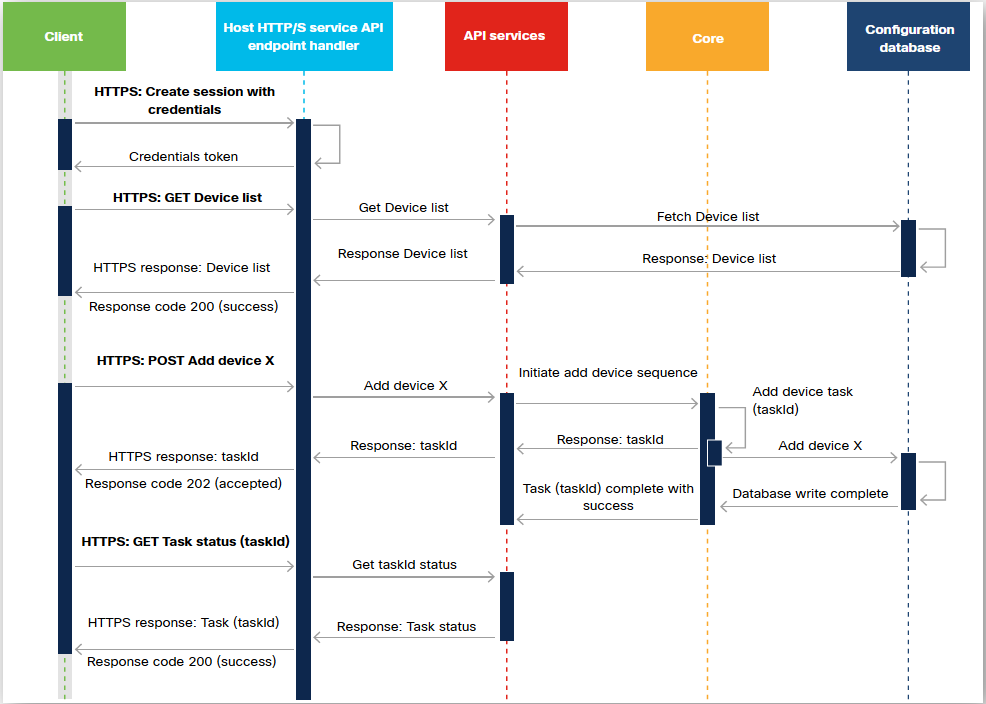
respond to request directly, provide data immediately
used when data is readily available, i.e. stored in database/memory - server can fetch data instantly
Asynchronous API
Provide response to let user know request has been received, but response doesn't contain data - server processes request (may take a while) and sends notif (or triggers callback) when data is ready
Used when request is an action that takes time for server to process or if data not readily available
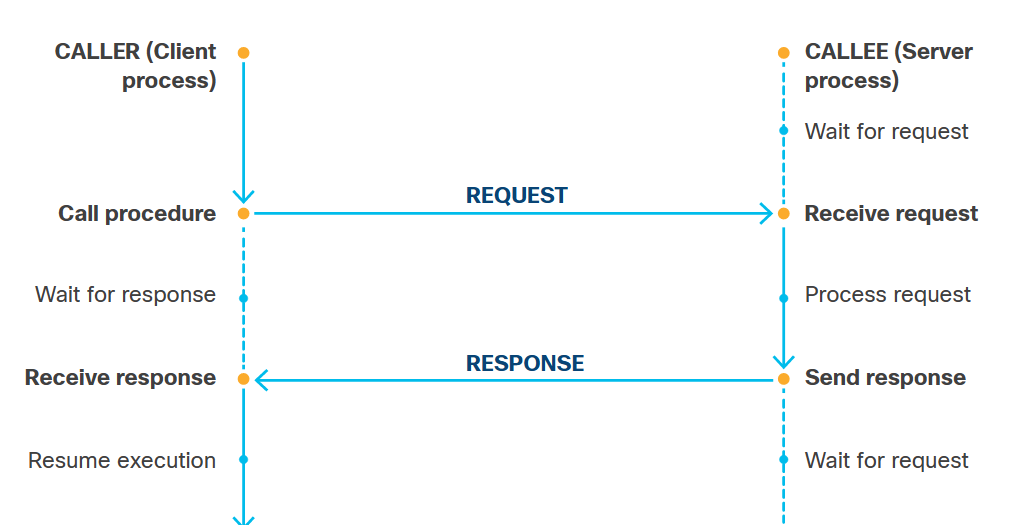
Lets app (client) make procedure call to another app (server)
Client typically unaware that the procedure request is being executed remotely; request made to a layer that hides those details
Commonly, client makes synchronous req to the server and is blocked while server processes request; when server is done, sends response back which unblocks the process
Example implementations
XML-RPC, JSON-RPC, NFS, SOAP
Simple Object Access Protocol (SOAP)
messaging protocol for communicating between apps that might be on different platforms/built with different langs
XML-based (considered an application of XML), developed by Microsoft
Commonly used with HTTP but can be applied to other protocols - SMTP, TCP, UDP, JMS
Messages contain four elements
Envelope, Header, Body, Fault
Envelope: root element, tells you the XML doc is a SOAP message
Header: optional; if present, must be first child of Envelope. Contains app-specific info like authorization, attributes
Body: contains data to be sent to server; must be XML and in its own namespace
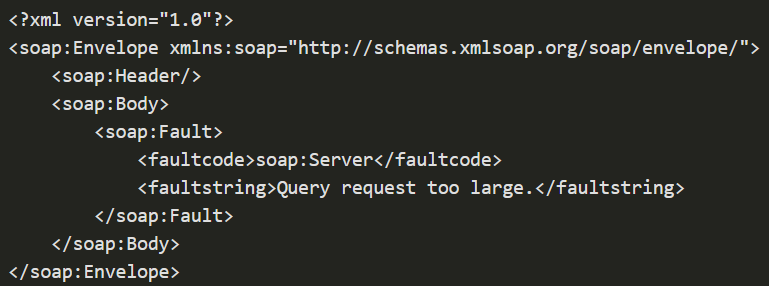
Fault: optional, must be child of Body if present. Provides error/status info. Can only be one fault element in a SOAP message
Representational State Transfer (REST)
Architectural design; can be applied to any protocol
Six constraints
Client-server: should be independent of each other
Stateless: requests from client must contain all info server needs to make the request, server can't maintain session states
Cache: responses from server must indicate whether response is cacheable - if it is, client can use the data for later requests
Uniform interface: must adhere to these 4 principles
Identification of resources - resource must be identified in the request as the object the server will access and manipulate
Manipulation of resources through representations - client receives representation from the server, which must contain enough data/metadata for client to be able to manipulate the resource
Self-descriptive messages - each message must contain all info for recipient to process the message
Hypermedia as the engine of application state - data sent by server must include additional actions/resources available for the client to access supplemental info about the resource
Layered system: hierarchical layers, each layer provides service only to the layer above it
Code-on-demand: optional; info returned by a REST service can include executable code
URI/URL
scheme:[//authority][/path][?query]
Headers
Request headers - include additional info not related to content of the message, like Authorization
Entity headers - additional info that describe the content of the body of the message, i.e. Content-Type
Response headers - contain additional info not related to content of message, e.g. Set-Cookie, Cache-Control
Modern version is OAuth 2.0, not backwards compatible
Lets pre-registered apps get authorization to perform REST API requests on user's behalf, without user needing to share credentials with the app itself
Lets user provide creds directly to the authorization server (typically an IdP or IdS) to obtain access token that is shared with application
Process of obtaining the token is called a flow; app then uses this token in the REST API as Bearer Auth
Leaky bucket: incoming reqs go into a queue, can come in at any rate but server processes at a fixed rate. If queue is full, request is rejected
Token bucket: get x tokens per y time, accumulative. When req is made, server checks the bucket to make sure you have at least one token (and rejects if there are no tokens)
Fixed window counter: Similar to token bucket, but uses a counter instead of tokens and is not accumulative. The time window is strict, i.e. starts based on clock, not when you make a request
Sliding window counter: Similar to fixed window, but the time window begins when you make a request, not based on the clock